IDE Hard Drive Western Digital WD800
$24.95
Out of stock
Description
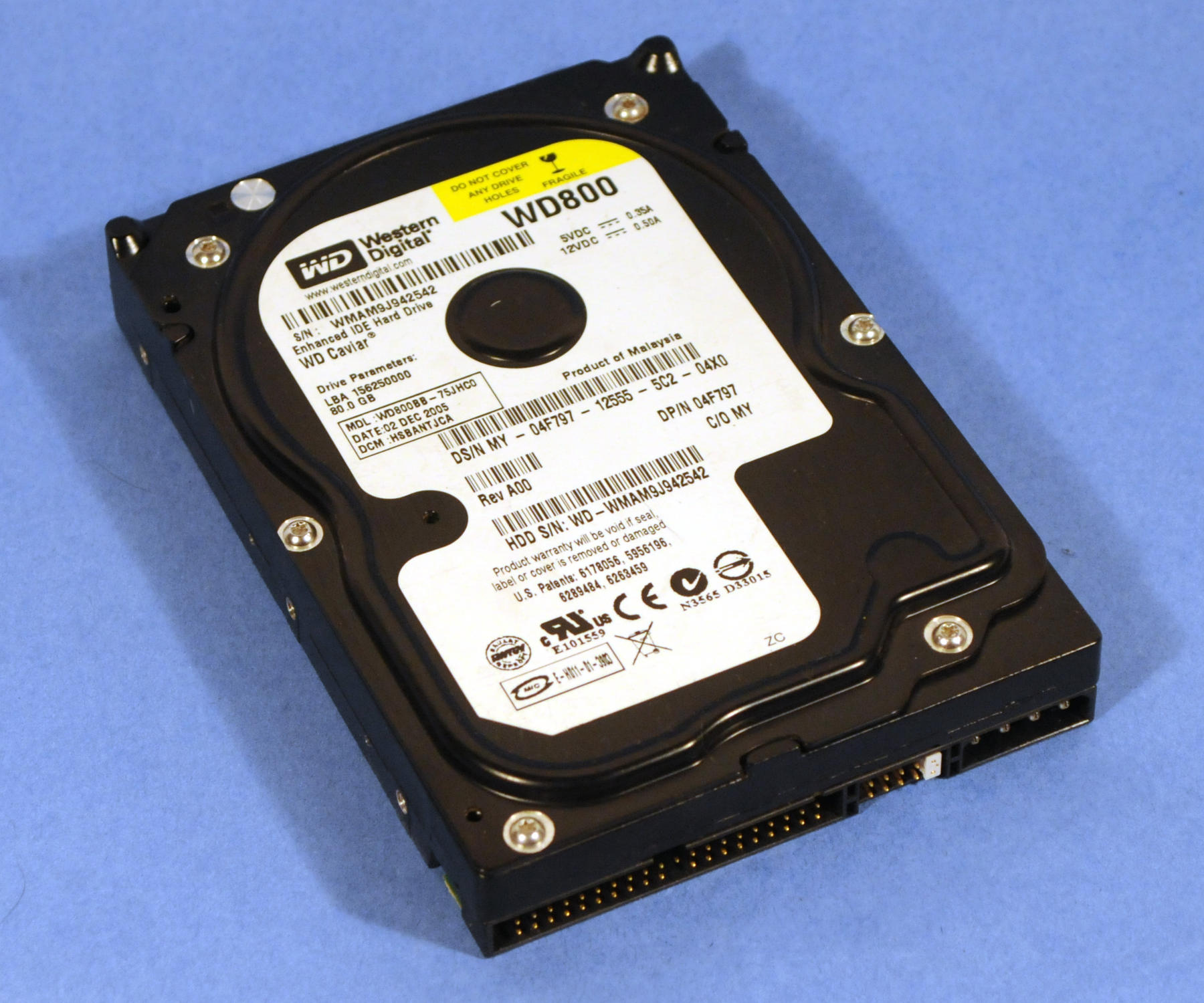
The Western Digital WD800BB-75JHC0 is an 80GB hard drive from the Caviar series (specifically the WD800BB family), a mainstream 3.5-inch IDE/PATA drive released around 2002–2003. It was part of Western Digital’s performance-oriented Caviar lineup for desktop PCs during the early Athlon XP / Pentium 4 era, succeeding earlier models like the WD600 series.
*** Hard drive is tested for good S.M.A.R.T. , no bad sectors and is formatted as an NTFS partition. Actual drive is pictured.
Here are the key specifications compiled from historical product data sheets, vendor listings, and consistent references (e.g., WD Caviar datasheets for the BB series):
- Capacity: 80 GB (formatted; actual usable space ~74–75 GiB due to binary vs. decimal GB calculation and filesystem overhead)
- Interface: IDE / PATA (Parallel ATA), Ultra ATA/100 (ATA-6), backward compatible with ATA/66, ATA/33, PIO modes, etc. → Max theoretical burst transfer rate: 100 MB/s
- Form Factor: 3.5-inch (standard desktop, ~1-inch height)
- Spindle Speed: 7200 RPM
- Cache / Buffer: 2 MB
- Average Seek Time: ~8.9 ms (read; write slightly higher, e.g., ~10.9 ms typical for the series)
- Average Latency: ~4.2 ms
- Platter / Head Configuration: Typically 1 platter / 2 heads (using high-density platters of the era; some variants used 2 platters, but most WD800BB were single-platter designs)
- Other Features:
- Fluid Dynamic Bearing (FDB) motor for quieter, cooler, and more reliable operation (reduced vibration and noise compared to ball-bearing designs)
- ShockGuard protection for improved shock resistance
- Data Lifeguard (Western Digital’s monitoring, diagnostics, and data protection technology)
- S.M.A.R.T. support for predictive failure monitoring
- Quiet operation emphasis (low acoustics for desktop use)
- Power Consumption: Typical for the era (~6–9W active; standard 4-pin Molex power connector)
- MTBF (Mean Time Between Failures): ~400,000–600,000 hours (manufacturer claim for Caviar series)
- Acoustics: ~28–32 dB idle/seek (relatively quiet for a 7200 RPM drive)
- Compatibility: Works with older motherboards supporting IDE/ATA; jumper settings for Master/Slave/Cable Select (standard WD layout: refer to drive label for pin diagram—often Master: jumper on specific pins, Slave: none, CS: middle pins for cable-determined role)
- Jumper Settings (typical WD Caviar ATA layout):
- Master (or single drive): Jumper across designated pins (e.g., 5-6 or as labeled)
- Slave: No jumper
- Cable Select (CS): Jumper on CS pins; recommended with 80-wire cable for ATA/100 speeds
This drive offered solid performance for its time—faster sustained transfers and quicker seeks than 5400 RPM models—making it popular for gaming, office work, and general desktop upgrades. It was marketed as reliable and quiet, with FDB helping avoid some noise/vibration issues common in earlier 7200 RPM drives.