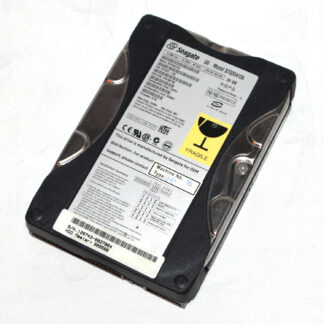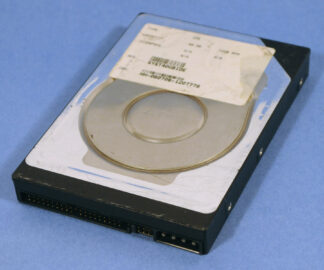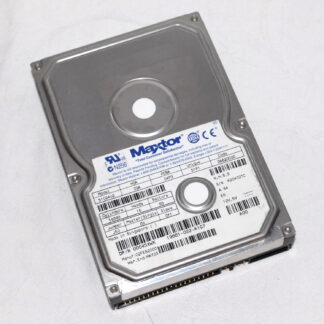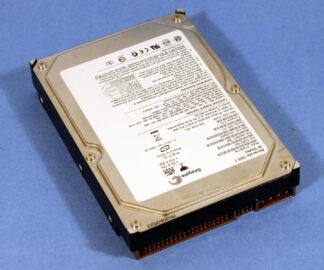
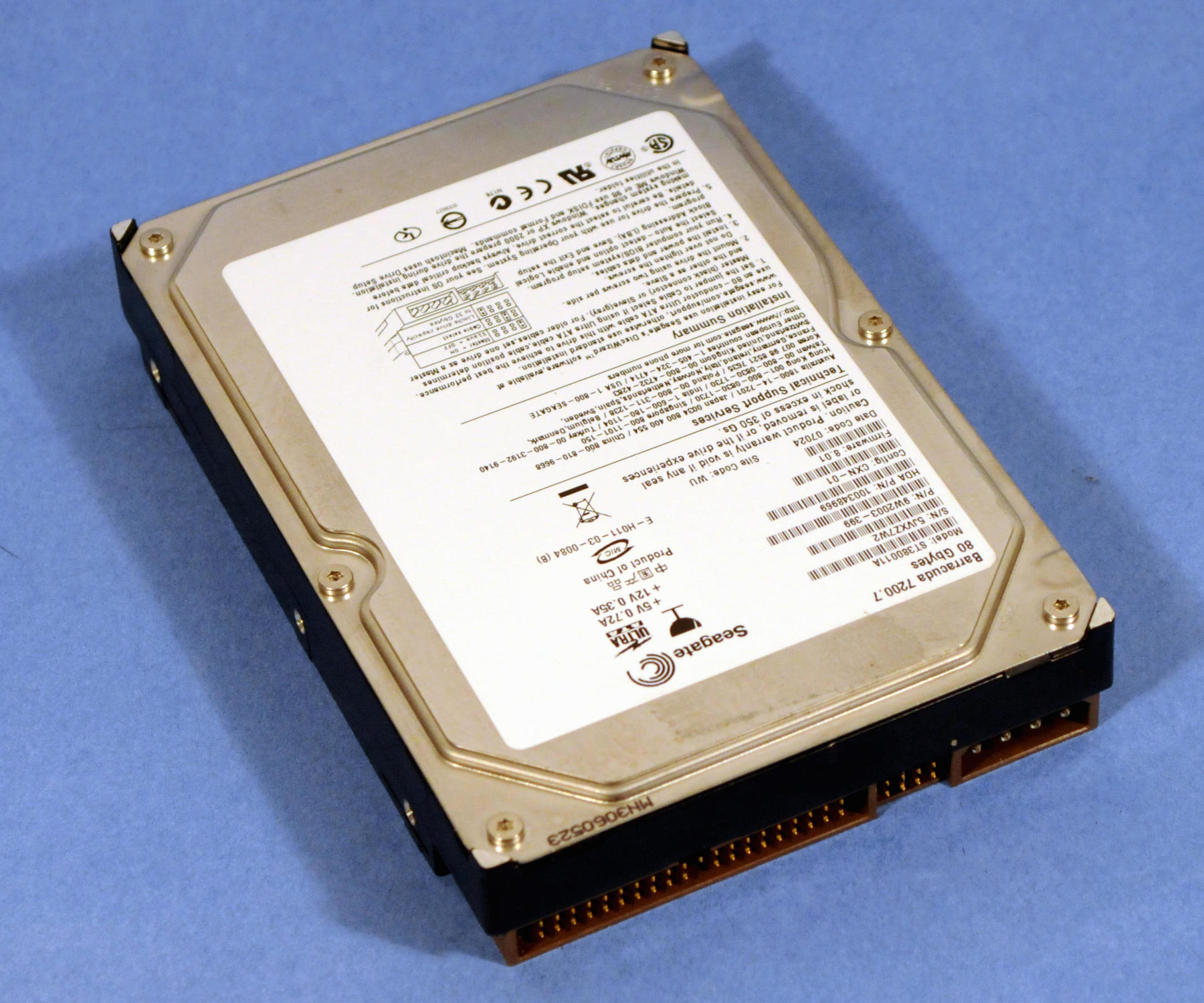
IDE Hard Drive Seagate ST380011A 80 GB
$22.95
2 in stock
Description
The Seagate ST380011A is an 80GB hard drive from the Barracuda 7200.7 series (PATA/IDE family), a popular mainstream/performance 3.5-inch IDE/PATA drive released around 2003–2004. It was part of Seagate’s Barracuda lineup, succeeding earlier models and offering good speed/reliability for desktop upgrades in the Pentium 4 / Athlon 64 era, before the widespread adoption of SATA.
*** Hard drive is tested for good S.M.A.R.T. , no bad sectors and is formatted as an NTFS partition.
Here are the key specifications based on the official Seagate Barracuda 7200.7 Product Manual (covers ST380011A) and consistent historical/vendor data:
- Capacity: 80 GB (formatted; actual usable space ~74–75 GiB due to binary vs. decimal calculation and overhead)
- Interface: IDE / PATA (Parallel ATA), Ultra ATA/100 (ATA-6), backward compatible with ATA/66, ATA/33, PIO modes, etc. → Max theoretical burst transfer rate: 100 MB/s
- Form Factor: 3.5-inch (standard desktop, ~1-inch / 26.1 mm height)
- Spindle Speed: 7200 RPM
- Cache / Buffer: 2 MB
- Average Seek Time: ~8.5–9.5 ms (read/write; typical ~9.5 ms read from data sheets)
- Average Latency: ~4.16 ms (at 7200 RPM)
- Platter / Head Configuration: Typically 1 platter / 2 heads (single-platter design using ~80 GB/platter density technology)
- Other Features:
- Fluid Dynamic Bearing (FDB) motor (SoftSonic in some references) for quieter, smoother, and more reliable operation with reduced vibration
- 3D Defense System (Seagate’s data protection: shock sensors, embedded servo, recovery features)
- S.M.A.R.T. support for predictive failure monitoring
- Enhanced shock protection and thermal monitoring
- Low power consumption and good acoustics for a 7200 RPM drive
- Power Consumption: Typical for the era (~6–9W active; standard 4-pin Molex power connector)
- MTBF (Mean Time Between Failures): ~600,000–1 million hours (manufacturer claim for Barracuda 7200.7 series)
- Acoustics: Idle ~2.8–3.0 bels (~28–30 dB); seek ~3.0–3.4 bels (~30–34 dB) (relatively quiet for class, thanks to FDB)
- Compatibility: Works with older IDE/ATA motherboards; jumper settings for Master/Slave/Cable Select (standard Seagate layout—check drive label: typically Master: jumper on pins 7-8 or as marked, Slave: no jumper, CS: jumper on pins 5-6 for cable-determined role; use 80-wire cable for ATA/100 performance)
- Jumper Settings (typical Seagate Barracuda ATA):
- Master (or single drive): Jumper closed on designated pins
- Slave: No jumper
- Cable Select (CS): Jumper on CS pins; recommended for plug-and-play
- Additional jumper options: Limit capacity (for legacy BIOS compatibility, e.g., to 32 GB or 137 GB LBA)
This drive delivered strong performance for its time—sequential transfers often 50–85 MB/s (outer zones higher, up to ~85 MB/s internal), quick seeks, and better reliability/noise than many 5400 RPM drives. It was a go-to choice for gaming, office, and general desktop use, competing with Western Digital Caviar WD800BB, Maxtor DiamondMax 9, and Samsung SpinPoint P80 equivalents.